Published: June 2026 | Bay Air Services | San Francisco & Marin County
If you’ve glanced at your energy bill lately and done a double-take, you’re not alone. We’ve been getting a lot of calls this summer from homeowners in San Francisco and Marin wondering why their air conditioning seems to be working overtime, and why their electricity costs are creeping up along with the temperatures.
The short answer? A few common (and fixable) issues are likely to blame. The slightly longer answer is what we’re going to break down for you.
The Bay Area Summer AC Trap
Here’s something most people don’t realize: the Bay Area’s climate actually puts more wear on HVAC systems than places with consistently hot weather. Why? Because our temperatures swing so dramatically – cool, foggy mornings followed by 85°F afternoons, or a week of mild weather suddenly interrupted by a heat wave. That constant starting and stopping cycles your system much harder than if it were just running steadily through a hot desert summer.
When your AC is running constantly and still struggling to keep up, that’s your system telling you something. It’s worth paying attention.
5 Reasons Your AC Won’t Stop Running
1. A Dirty or Clogged Air Filter
This is the number one culprit we find on service calls, and it’s also the easiest to fix. When your filter gets clogged with dust, pet dander, and pollen, your AC has to work much harder to pull air through. That means longer run times, more energy used, and less effective cooling.
How often should you change it? For most Bay Area homes, every 60–90 days is a good rule of thumb. If you have pets or anyone with allergies in the house, aim for every 30–45 days.
2. Low Refrigerant (Freon) Levels
If your AC is blowing air but it just doesn’t feel cold enough, low refrigerant is often the culprit. Refrigerant doesn’t get “used up” the way fuel does- so if your levels are low, that means there’s a leak somewhere in the system. Running your AC with low refrigerant doesn’t just cost you more on your energy bill; it puts serious stress on the compressor, which is one of the most expensive parts to replace.
This is something that needs a licensed HVAC technician to diagnose and repair. If you’re noticing your home just isn’t cooling down the way it used to, this is worth having checked out.
3. Leaky or Poorly Insulated Ductwork
San Francisco and Marin County have a lot of older homes, and older homes often have ductwork that’s lost its seal over the years. When conditioned air leaks out before it reaches your living spaces, your system has to run longer to compensate. Studies have shown that homes with leaky ducts can lose 20–30% of their cooling capacity before it ever gets to the rooms you’re trying to cool.
Signs of duct issues include rooms that never seem to get as cool as others, higher-than-usual energy bills, and excessive dust accumulation around vents.
4. An Oversized or Undersized System
This is something we see more often than people expect. If your AC was installed without a proper load calculation, or if you’ve made significant changes to your home since it was installed (added insulation, converted a garage, changed windows), your system size may no longer match your home’s actual needs.
An undersized unit will run constantly trying to keep up. An oversized unit will “short cycle” (turning on and off rapidly) which is inefficient and hard on the equipment. Either way, you’re paying more than you should be.
5. Your System Is Just Getting Old
Most residential AC systems have a lifespan of 15–20 years. If yours is approaching or past that range, efficiency naturally declines even if it’s been well-maintained. Older systems also use refrigerants that are being phased out, making repairs increasingly expensive.
If your system is in its senior years, it’s worth having an honest conversation about repair vs. replacement. Sometimes a tune-up buys you another season. Other times, the math just makes more sense to upgrade- especially given how much more efficient modern systems are compared to units from even 10 years ago.
What a Constantly Running AC Is Actually Costing You
Let’s put some rough numbers on this. The average central AC unit in California uses somewhere between 3,000–5,000 watts per hour. With PG&E’s summer rates running higher than most parts of the country, a system that’s running 20% more than it should be can easily add $50–$150 to your monthly bill, sometimes more.
Over a full summer, that’s real money. And in many cases, a professional tune-up or simple repair pays for itself within the first billing cycle.
What You Can Do Right Now
Before you call us (though we’d love to hear from you), here are a few things worth checking yourself:
- Replace your air filter if you haven’t done it in the last 60 days
- Check your thermostat settings– make sure it’s set to “auto” not “on” (the “on” setting runs the fan continuously, even when cooling isn’t needed)
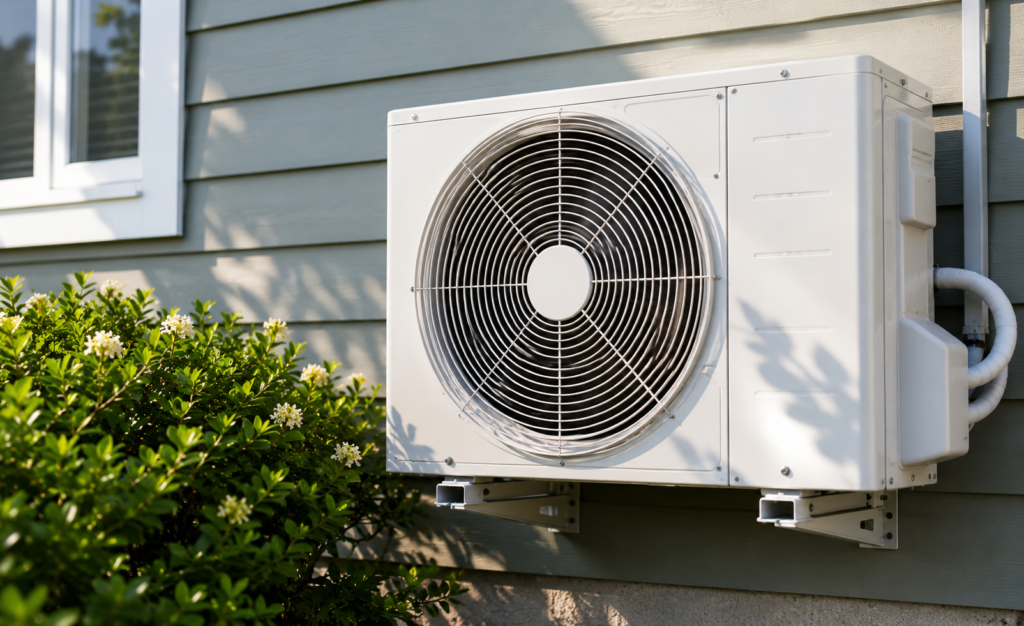
- Clear the area around your outdoor unit– make sure there’s at least 2 feet of clearance and that it’s not blocked by plants, fences, or debris
- Close blinds and curtains on the sun-facing side of your home during peak afternoon hours to reduce heat gain
- Check your vents to make sure none are blocked by furniture or rugs
If you’ve done all of that and your system is still struggling, it’s time to have a professional take a look.
We’re Here When You Need Us
At Bay Air Services, we’ve been keeping homes in San Francisco and Marin comfortable for years. Whether you need a summer tune-up, suspect a refrigerant leak, or just want an honest assessment of how your system is holding up, we’re happy to help.
Call us at (628) 289-3552 or visit bayairservices.com to schedule a service appointment.
There’s no pressure, no upselling, just straightforward HVAC service from people who know this area and the specific demands it puts on home comfort systems.
— The Bay Air Heating & Cooling Services Team