
You call around for heat pump quotes, get a number that sounds reasonable, and then somewhere in the conversation someone mentions your electrical panel might need to be upgraded too. Suddenly the project has a second price tag you didn’t budget for, and nobody has explained why.
This comes up constantly in San Francisco and Marin County, and there’s a simple reason. A lot of the housing stock here, especially homes built between the 1950s and 1980s, was wired for a 100-amp electrical service. That was plenty for a house with gas heat, a gas water heater, and a handful of standard appliances. It was never sized with a heat pump, a mini-split, an EV charger, and an induction range all pulling from the same panel. So when electrification interest goes up, this exact conversation goes up with it.
The good news is that a maxed-out panel isn’t automatic. Some homes with 100-amp service can support a heat pump without any panel work at all. Others genuinely need an upgrade. The only way to know which situation you’re in is a real calculation, not a guess based on the panel’s age or its label.
What “100 Amps” Actually Tells You
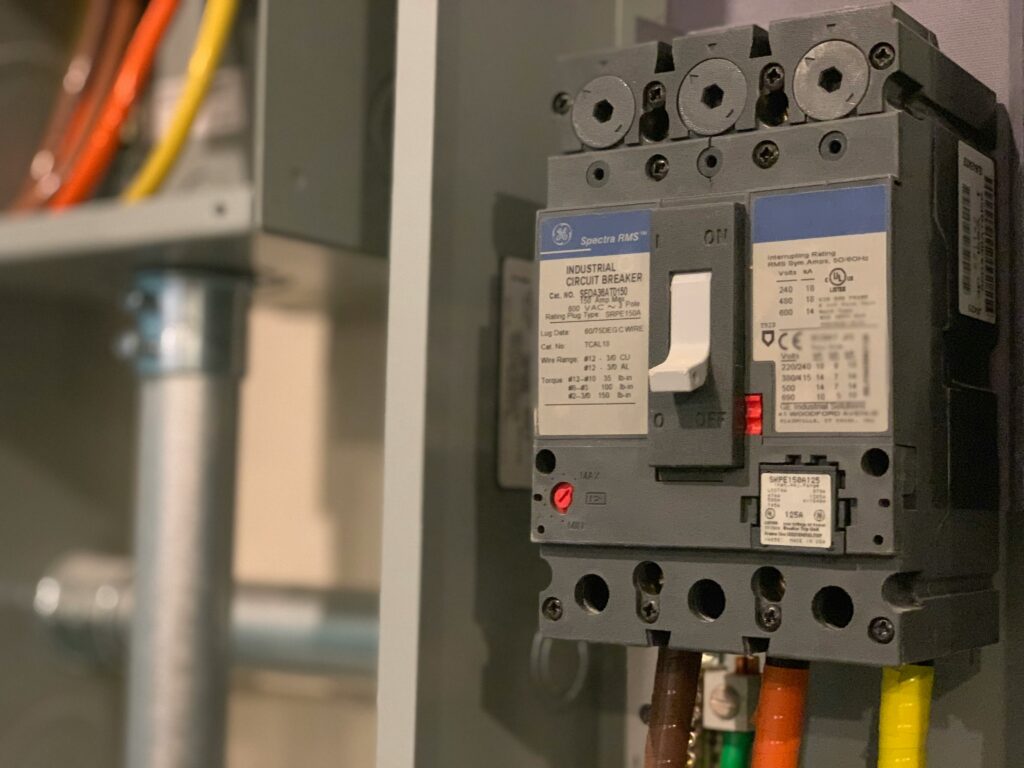
The number on your panel’s main breaker is its rated capacity, not a measurement of how much power your house is actually using. A 100-amp panel has roughly 80 amps of usable continuous capacity once you account for safety margins. Whether that’s enough room for a heat pump depends entirely on what else is already pulling from that same panel: central air, an electric dryer, an electric water heater, a range, and anything else with a heavy draw.
Two homes can have the identical 100-amp panel and land in completely different situations. One might have plenty of headroom because most of its appliances are still gas. The other might already be close to its limit because of an electric dryer, an electric water heater, and a couple of window AC units, in which case adding a heat pump tips it over.
This is why “you have a 100-amp panel, so you need an upgrade” isn’t a real answer on its own. It’s a guess dressed up as an answer.
What a Heat Pump Actually Asks of Your Panel
Heat pumps and mini-splits run on 240-volt circuits and draw meaningfully more power than the equipment they typically replace. Depending on the size and style of the system, a heat pump can draw as much as 60 amps during startup, which is a much bigger ask than most homeowners expect from something that’s essentially heating and cooling equipment.
That draw has to be weighed against everything else already wired into your panel, which is exactly what a proper electrical load calculation does. Licensed electricians use a standardized method (the National Electrical Code’s load calculation procedures) to add up your home’s existing electrical demand, factor in that not everything runs at full power simultaneously, and determine how much real capacity is left. That calculation, not the age of your panel or a general rule of thumb, is what actually answers the question.
What You Can Observe Yourself, and What You Can’t
There are a few things worth checking before you ever call anyone:
- The label inside your panel door. It usually states the service amperage (100A, 150A, 200A). This tells you your starting point, not your final answer.
- How full your panel physically is. If there’s no open slot for a new double-pole breaker, that’s relevant information even before the load math gets done.
- What’s already running on electricity in your home. An electric dryer, electric water heater, electric range, or existing central AC all compete for the same capacity a heat pump would need.
What you can’t reliably determine on your own is whether your specific combination of those factors leaves enough room. That requires an actual load calculation performed by a licensed electrician, using your home’s real numbers rather than assumptions. Guessing in either direction, assuming you’re fine or assuming you automatically need a full service upgrade, is how homeowners end up either surprised mid-project or paying for work they didn’t need.
The Real Options
If a load calculation shows your existing panel has enough room, you may not need any electrical work beyond adding the new circuit for the heat pump itself. That’s the best-case scenario, and it’s more common than a lot of homeowners assume going in.
If the calculation shows you’re close to capacity, there are a few paths short of a full panel replacement. Smaller point-of-use heat pump equipment on a 120-volt circuit exists for some applications and may avoid the need for a new 240-volt circuit entirely, depending on the equipment and the space being conditioned. Load management devices, which prioritize which appliances draw power at a given moment so the panel never actually exceeds its rating, are another option some homeowners use to avoid an upgrade. A subpanel is sometimes the right fix for a specific room or addition rather than replacing the whole main panel.
If the calculation shows you’re genuinely out of capacity, a full panel upgrade, often to 200 amps, is the honest answer. It’s a real cost, but it’s also often the same upgrade that supports future additions like an EV charger, so it’s worth thinking about it as an infrastructure decision rather than a cost attached to just this one project.
None of these are decisions Bay Air makes for you. They’re decisions a licensed electrician determines based on your load calculation, and ones you make based on your budget and plans for the house.
What Not to Do
Don’t open your electrical panel to try to assess capacity yourself, and don’t attempt any panel or circuit work on your own. This is licensed electrician territory, and for good reason: panels carry real safety risk, and older equipment (some brands from the 1960s and 70s have documented failure issues) can be dangerous to work on even for something as simple as counting open slots.
Don’t accept “you have a 100-amp panel, so you need an upgrade” as a final answer without a load calculation behind it. It might be true, but it should be a conclusion, not a starting assumption.
Don’t assume the newest, biggest heat pump on the market is the right fit before you know what your panel can support. Sometimes the right-sized equipment for your actual home avoids a conversation about panel capacity altogether.
Questions Worth Asking Before You Approve Any Work
- Has an actual electrical load calculation been done for my home, or is the panel upgrade recommendation based on the panel’s age alone?
- What’s my home’s current load, and how much of my panel’s capacity is already in use?
- Are there heat pump or mini-split options that would fit within my existing panel capacity?
- If a panel upgrade is genuinely needed, does it make sense to size it for future additions like an EV charger at the same time, rather than doing this twice?
- Who is actually performing the load calculation and any panel work, and are they a licensed electrician?
Where Bay Air Hesting & Cooling Fits Into This
Sizing and recommending the right heat pump or mini-split for your home, your layout, and your comfort needs is HVAC work, and that’s where Bay Air comes in. Evaluating and upgrading your electrical panel is licensed electrical work, and that’s a separate scope we’ll always be upfront about rather than blur together. When the two intersect, as they often do with electrification projects, the honest path is coordinating both pieces clearly instead of treating the electrical question as an afterthought.
If you’re considering a heat pump or mini-split for a San Francisco or Marin County home and aren’t sure where your panel stands, that’s a reasonable first question to bring to us. We can talk through what the equipment side actually requires for your specific space, so you go into an electrical evaluation with real information instead of a guess.
FAQs
Does having a 100-amp panel automatically mean I need an upgrade for a heat pump? No. It means it’s worth checking. Some 100-amp homes have enough available capacity for a heat pump once existing loads are calculated; others don’t. The panel’s age or amperage alone doesn’t answer the question.
Who actually determines whether my panel needs an upgrade? A licensed electrician, using a formal electrical load calculation based on your home’s actual existing appliances and the new equipment’s requirements. This isn’t something an HVAC contractor determines on their own.
Can I just add a heat pump and see what happens? No. Overloading a panel isn’t a trial-and-error situation. At best, breakers trip repeatedly. At worst, sustained overloads create real fire risk. This is exactly why a load calculation happens before installation, not after.
Is a panel upgrade always the most expensive path? Not necessarily. Depending on your home’s existing capacity, options like right-sized equipment, load management devices, or a subpanel for a specific area can sometimes avoid a full panel replacement. Which option fits depends on your specific load calculation.
If I do need a panel upgrade, should I plan for anything else at the same time? That’s worth discussing with your electrician. If you’re also considering an EV charger or other major electrical additions down the road, it’s often more efficient to plan for that capacity during the same upgrade rather than doing the work twice.