
When it comes to heating and cooling your home efficiently, the equipment isn’t the only thing that matters. The ductwork (those hidden tubes that move air through your walls, attic, and crawl spaces) plays a huge role in how comfortable and healthy your home feels.
At Bay Air Heating & Cooling, we work on homes across San Francisco, Marin County, and the greater Bay Area, and one question comes up again and again:
“What kind of ductwork is best- metal or flex?”
Let’s break down how each one performs in real-world conditions, and what’s best for your home’s airflow and air quality.
What’s the Difference Between Metal and Flexible Ductwork?
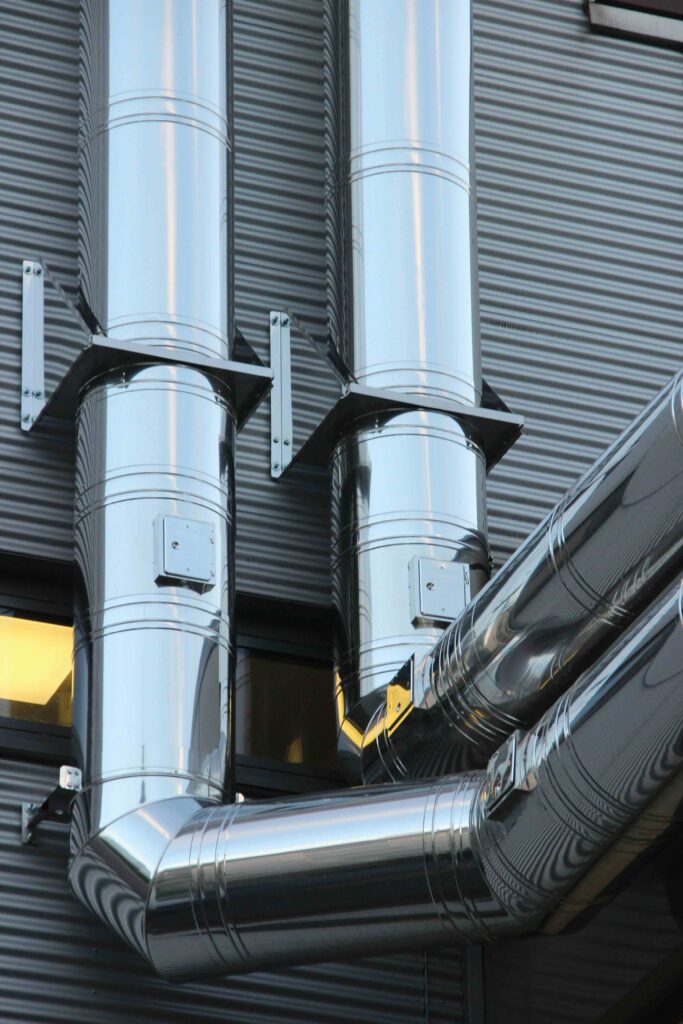
- Metal ductwork is typically made of galvanized steel or aluminum. It’s rigid, durable, and has smooth inner walls that help air move efficiently.
- Flexible ductwork, often called “flex duct,” uses a coiled wire covered in plastic and insulation. It’s lightweight and easy to install, which makes it a common choice for newer homes and remodels.
Both deliver air from your HVAC system to your living spaces, but how they do it (and how well they do it) can vary dramatically.
Airflow Efficiency
Air doesn’t like friction.
Metal ducts have smooth interiors, so air can move freely and evenly throughout the system. That means:
- Less pressure loss
- Quieter airflow
- Fewer hot/cold spots
- More accurate temperature control
Flexible ductwork, by contrast, has ridges inside that can create turbulence and resistance. If installed too long or bent at sharp angles, airflow can drop by 10–30%.
Our take: For long runs or main supply lines, metal ducts deliver better efficiency and consistent comfort. Flex is fine for short, straight connections to vents.
Air Quality and Cleanliness
Metal ducts win again here. Their rigid, smooth surface resists dust buildup and can be easily cleaned during maintenance.
Flexible ducts, however, can collect debris, moisture, and even mold if air leaks or condensation occur. Because the inner liner is softer, it’s also harder to clean without damaging it.
Our take: Metal ductwork supports better indoor air quality long-term, especially important for allergy-prone households or coastal climates like Marin and San Francisco.
Durability and Lifespan
- Metal ducts: 30–50 years with proper sealing and insulation.
- Flexible ducts: 10–20 years, depending on installation quality and exposure.
Flex ducts can sag, tear, or become crushed over time – reducing airflow and straining your HVAC system. Metal ducts, while more expensive upfront, tend to last decades longer.
Our take: If you plan to stay in your home long-term or value durability, metal ducts are the smarter investment.
Installation and Cost
Here’s where flexible ducts shine: they’re faster and cheaper to install, especially in tight spaces or attic retrofits.
However, installation quality is everything. Even a well-made flexible duct system can underperform if:
- Runs are too long
- Bends are too sharp
- Ducts aren’t sealed properly
- Insulation is compressed or torn
Our take: Metal costs more upfront but provides lasting performance. Flex ducts are fine for secondary runs if installed correctly by trained technicians.
Hybrid Systems: The Best of Both Worlds
In most modern HVAC systems, the most efficient layout is hybrid:
- Metal ducts for main trunks (supply + return lines).
- Short flexible ducts for final runs to vents.
This approach balances performance, cost, and flexibility, ideal for Bay Area homes where space constraints meet year-round climate variation.
If you’re replacing or upgrading your duct system, don’t just think about the material- think about design, sealing, and airflow testing.
The best duct system isn’t one you see, it’s one you don’t notice at all because it quietly delivers clean, balanced, efficient comfort.
At Bay Air Heating & Cooling, we design, install, and test duct systems with performance, air quality, and longevity in mind. Whether you’re upgrading an existing setup or building new, we’ll recommend the right materials for your home and lifestyle.